Week of August 19th, 2026
Posted on August 20, 2026Note: The next drought report will be issued the Week of October 5th.
Highlights:
- July 2026 was the first above normal precipitation month for Delaware since July 2025.
- Despite the relatively wet conditions recently, the state is has still experienced an 11.50 precipitation deficit over the 12 month period between August 2025 and July 2026.
- Soil moisture conditions are much improved due to the recent above normal rainfall Delaware has experienced.
- Long-term dryness means that even when heavy rains occur, streams and creeks are only able to temporarily flow at normal to above normal levels, thus spending most of time with below normal streamflow conditions.
- Groundwater conditions continue to drop steadily due to the long-term dry conditions.
- Drought conditions are expected to continue, but improve over the next three months (through October)
Statewide Drought Discussion
Precipitation
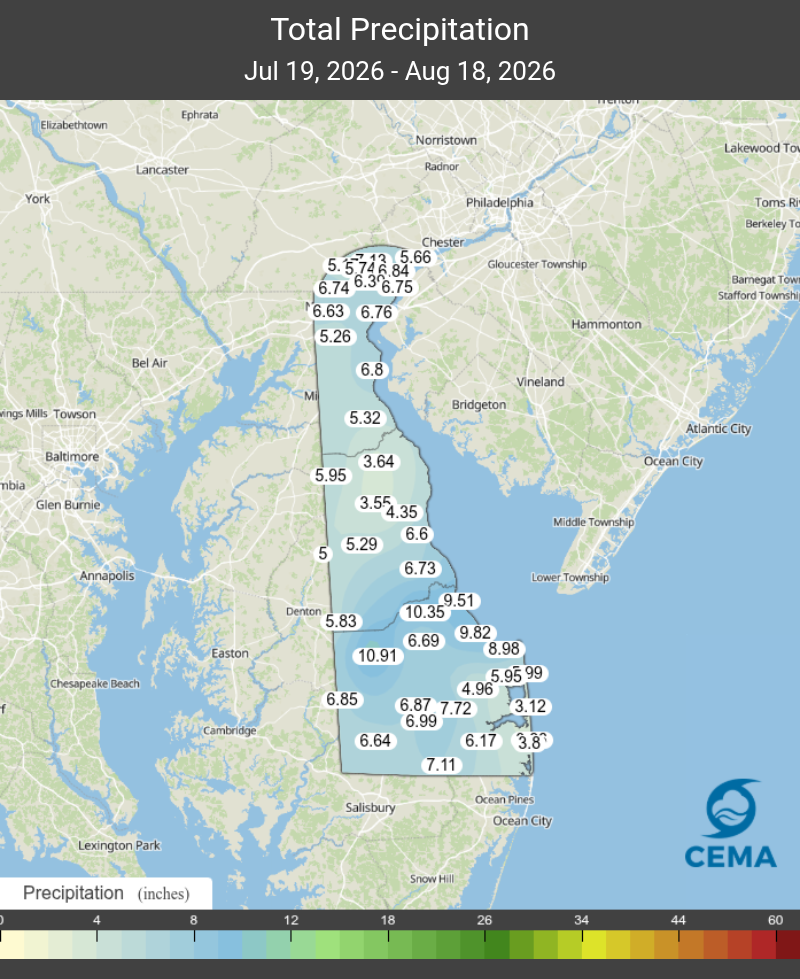
Delaware has experienced very wet conditions over the last 30 days. This resulted in July 2026 being the first above normal precipitation month, relative to the 1991-2020 normals for Delaware, since July 2025 – an 11 month streak of below normal precipitation conditions. Precipitation totals across the state during this timeframe ranged from 5-7 inches in New Castle County, to 3.5 to 7 inches in Kent County, to 3 to 11 inches in Sussex County. Milford has received more rain since July 19th than it did from March 1st through July 18th (~4.5 months).
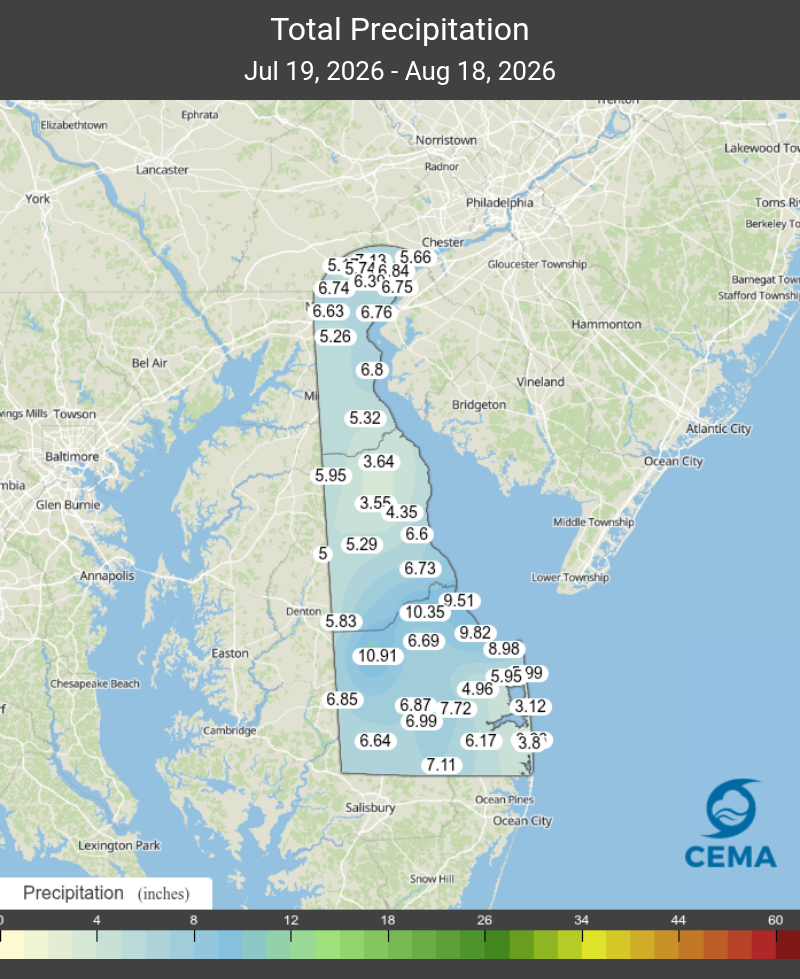
While the recent rain has been welcomed and much needed,Delaware, on a statewide basis, is still running a substantial precipitation deficit over the last 12 months. Between August 2025 and July 2026, the statewide precipitation deficit was 11.50 inches below the 1991-2020 normal reference period. This long-term dryness is the primary driver for the lingering impacts we’re seeing on streamflow and groundwater conditions throughout the state.
Temperature/Evapotranspiration
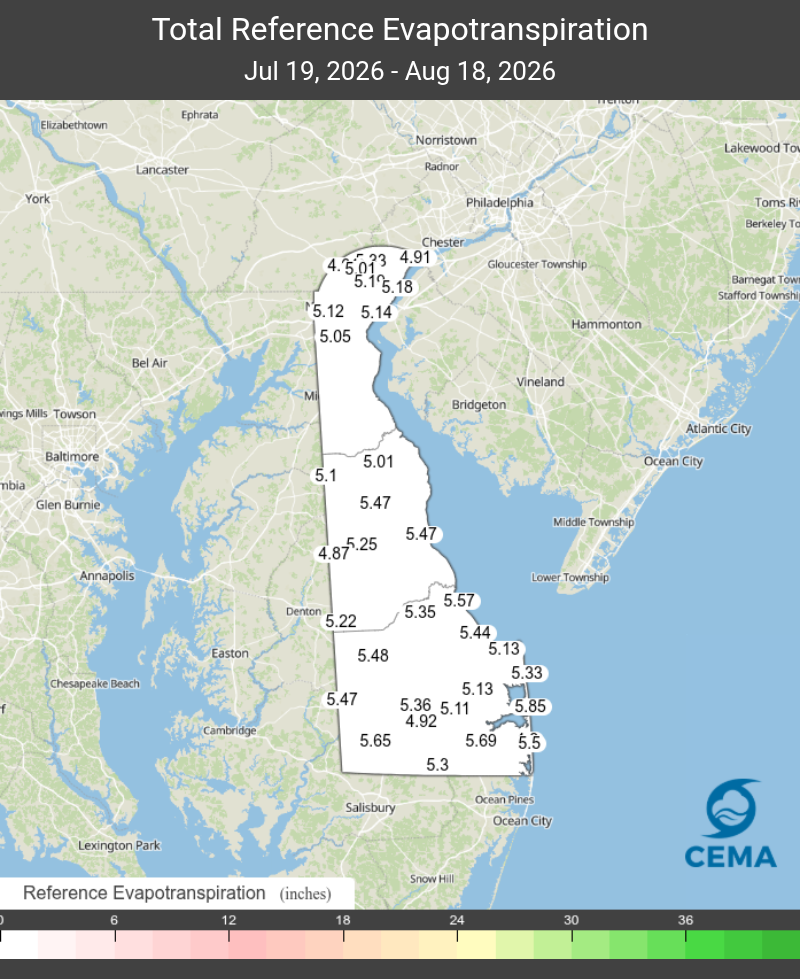
Statewide reference evapotranspiration rates were only slightly higher (+0.10 inches) than the average for the same period between 2021 and 2025, according to data from the DEOS Network. This was mostly driven by above normal temperatures, while very humid conditions limited the amount of evapotranspiration taking place. Figure 2 shows slightly higher rates in Sussex County than in Kent and New Castle Counties, which is a fairly typical pattern in the summer in Delaware.
Soil Moisture
Soil moisture conditions have improved significantly since the last drought update, particularly in Sussex County (Figure 3). Locations near Milford and Ellendale have seen as much as a 20% increase in relative soil moisture, which practically going from near wilting point to near field capacity for the soils in this area.
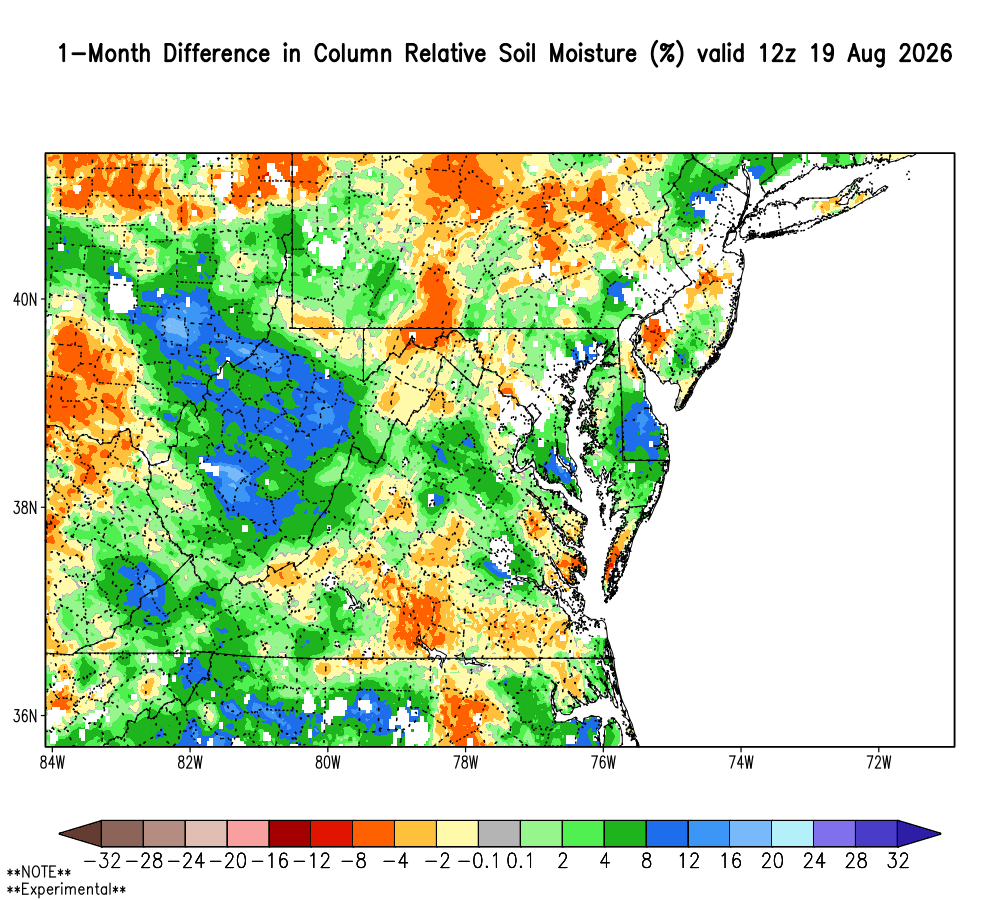
Overall, most of Delaware’s soil conditions are in the normal range for this time of year, with the lone exception being the MOT area and Smyrna. But even there, soil moisture conditions are still just below normal for this time of year.
Streamflow
Although there has been normal to above normal precipitation throughout the state, the fact remains that the streams have not yet fully recovered from the low flows that occurred in the fall of 2025.
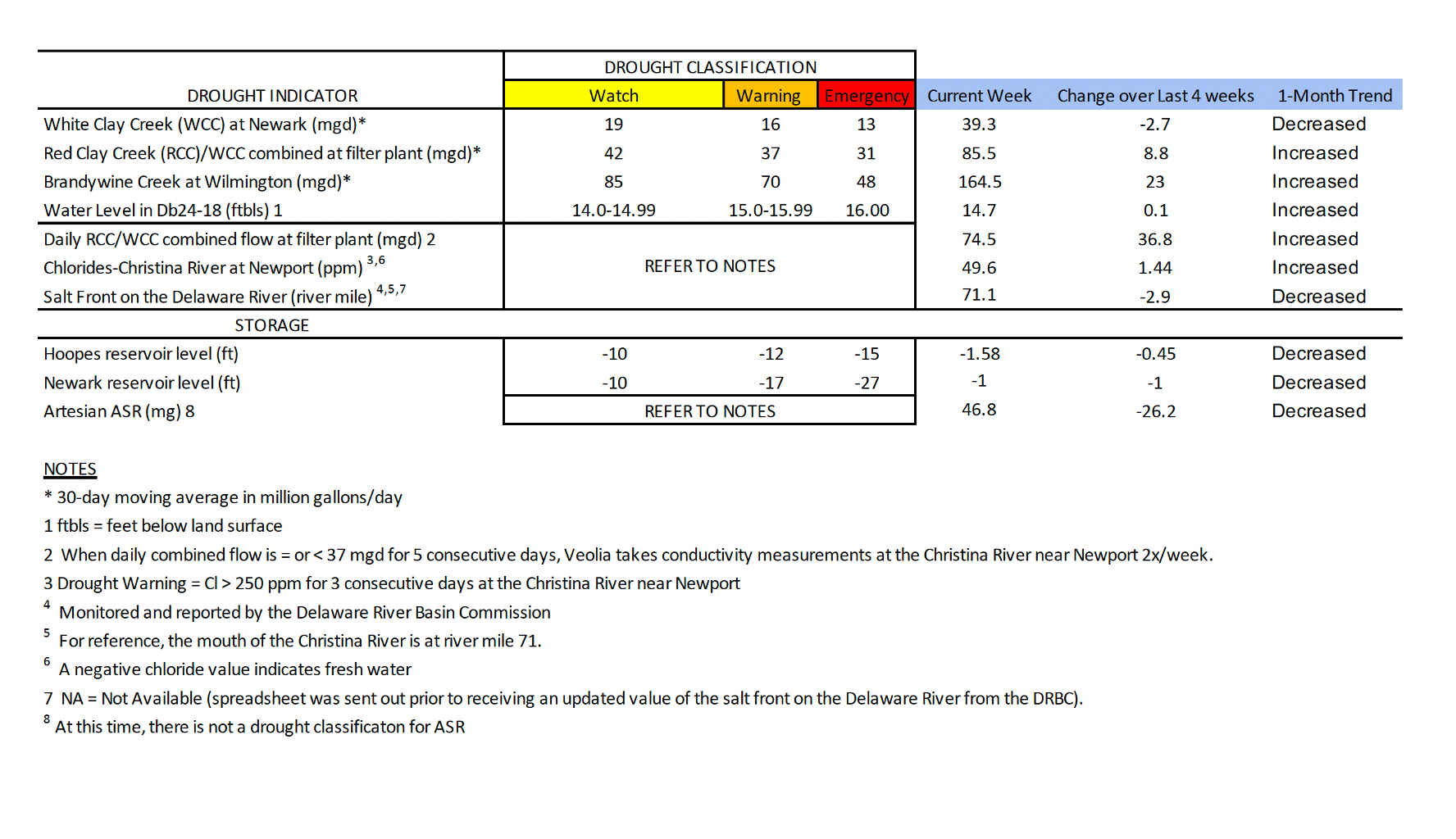
In northern New Castle County the flows on White Clay Creek, Red Clay Creek, and Brandywine Creek at Wilmington increase temporarily after storms, and within a couple of days the flows drop back into the below-normal range. This means that for this specific time of year, the flows are encountered only 10-25% of the time since streamflow records have been recorded.
In Kent County, the St. Jones River at Dover has maintained flow in the normal range since June with one excursion into the extremely below-normal range, which occurred at the beginning of July. Please note, however, that the flows on the St. Jones River at Dover are highly affected by tidal inflow and as such may be artificially inflated. Since early July, flows on the Nanticoke River at Bridgeville have been above normal to normal; however, they are currently trending toward the below normal range.
These sustained low-flow conditions pose significant risks to aquifer recharge and water quality parameters. To transition these systems back to seasonal norms, the state needs a sustained period of significant, above-normal precipitation over at least the next 60 days to either increase flows into the normal range or to maintain them in the normal range.
Chlorides
One of the most definitive indicators of a regional drought is the behavior of the Delaware River salt front—the interface where salty ocean water meets fresh river water. Specific conductance (a proxy for chloride) readings at the Christina River at Newport have been relatively low since the first week of July. Freshwater inflow to the Christina from scattered summer storms along with freshwater flows coming down from the headwaters of the Delaware River will tend to impede the advancement of chlorides up the Christina River.
Groundwater
Near Newark, the depth to the unconfined aquifer as measured in well Db24-18, dropped to over 14.9 feet below the land surface (fbls), which exceeds the typical August average of 11.0 to 13.6 fbls. A substantial amount of precipitation will be necessary for the water level in this well to recharge 1.3 ft, which will bring this water level to the very low end of normal for this time of year.
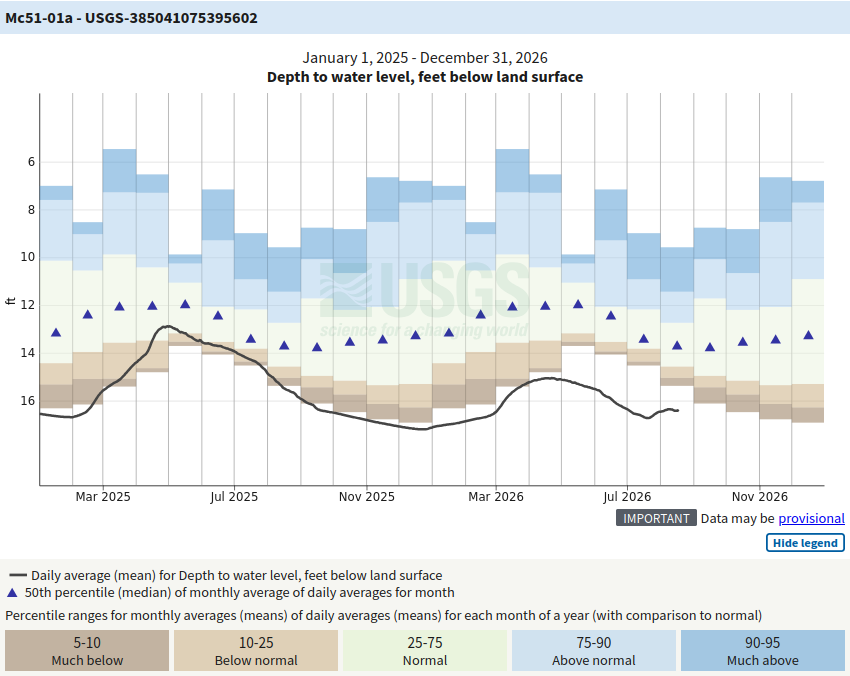
A critical USGS/DGS monitoring well in southwestern Kent County (Mc51-01a) has consistently been tracking much-below normal since the end of July 2025. Water levels in this well for each month since July 2025 have the potential to be record lows for this well. In August, the normal water level in this well is between 12.4 and 14.1 fbls; however, the current water level is at 16.4 fbls, which is extremely below normal (Figure 4).
After remaining in the normal range, monitoring well Pf24-02 (located south of Georgetown) dropped into the below normal range in late June. Currently, it has decreased in depth (meaning that the water level in the well is getting closer to the surface) and is currently at the very low end of normal. This slight decrease in the water level reflects the geographic variability in groundwater response to precipitation across Delaware.
Delaware’s groundwater system responds slowly to changes in precipitation compared with surface water (like streams and rivers). As a result, patterns of dry weather tend to show up first in streamflow and soil moisture, and then, if dry conditions persist, in groundwater levels and aquifer conditions.
Groundwater is a major source of drinking water and irrigation supply in much of Delaware, especially south of the Chesapeake and Delaware Canal. Extended periods of low levels can reduce well yields and may require deeper pumping or alternative supply strategies in some communities. Persistently low groundwater levels increase the risk of saltwater intrusion in coastal and near-estuarine aquifers, complicating long-term freshwater sustainment.
Weather and Climate Outlook
Thanks to Mother Nature turning the water back on this summer, our drought outlook is looking up right now. The latest seasonal drought outlook from NOAA’s Climate Prediction Center (CPC) shows that Delaware, and most of the drought stricken areas in the Mid-Atlantic and Northeast United States are expected to see improvement in overall drought conditions between August and October (Figure 5).
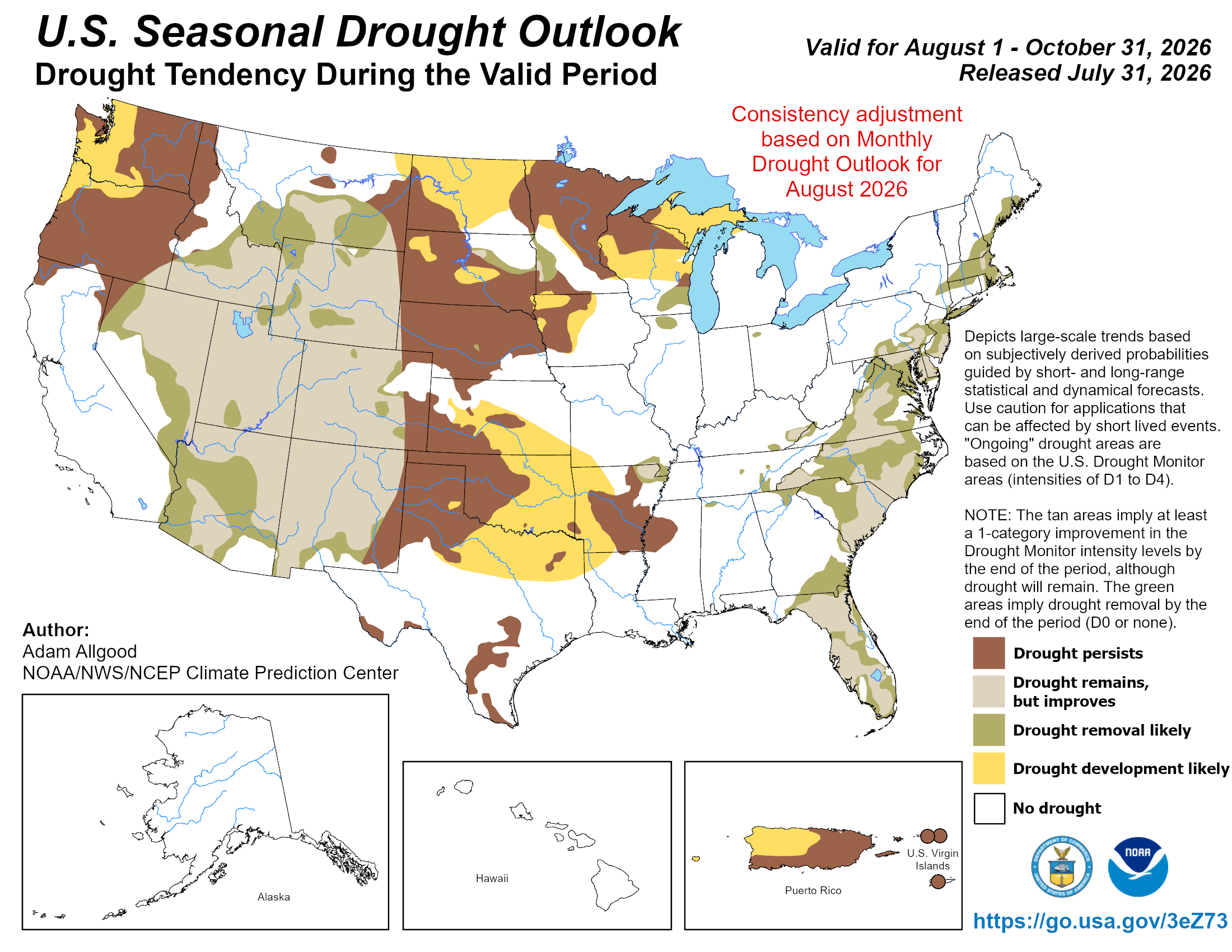
For Delaware in particular, drought conditions are expected to improve (which they already are), though drought may not completely be eliminated. This is mainly due to the long-term precipitation deficit and corresponding below normal stream and groundwater conditions we’re experiencing. While a wet couple of months will definitely get us moving in the right direction, it will take sustained normal to above normal precipitation over the next 4 to 6 months to get our hydrologic conditions back to normal and remain sustainable.
Delaware Drought Status
Watch
Resources
- Delaware Water Tracker
- DGS Water Conditions Report
- US Drought Monitor
- NOAA Climate at a Glance
- Drought.gov DE site
- DE Water Supply Coordinating Council
- DRBC Drought Dashboard
- Surrounding State Pages:

Climate Office Partners