
Week of October 12th, 2026
Posted on October 16, 2026Note: The next drought report will be issued the Week of November 9th, 2026
Highlights:
- Above-normal precipitation in September continued to aid drought recovery, pushing longer-term 90- and 180-day rainfall totals into positive territory.
- Lower evaporation rates in the fall and winter months could assist in recovery from the recent drought.
- Soil moisture conditions continue to do well, with some parts of the state seeing above normal soil moisture for this time of year.
- Streamflow has rebounded extremely well, with no stream gages in Delaware reporting below normal flows over the last few weeks.
- Groundwater recovery continues to lag behind surface water and soil moisture.
- Precipitation and temperatures are expected to be above normal for November and through the early part of the winter.
Statewide Drought Discussion
Precipitation
For the third month in a row, Delaware experienced above normal precipitation in September. The recent wet conditions have significantly improved our precipitation departures at key time horizons, such as 90 days (+5.53 inches) and 180 days (+1.14 inches). Having positive precipitation departures for these time frames will mean good news in other drought indicators, discussed later in this update.
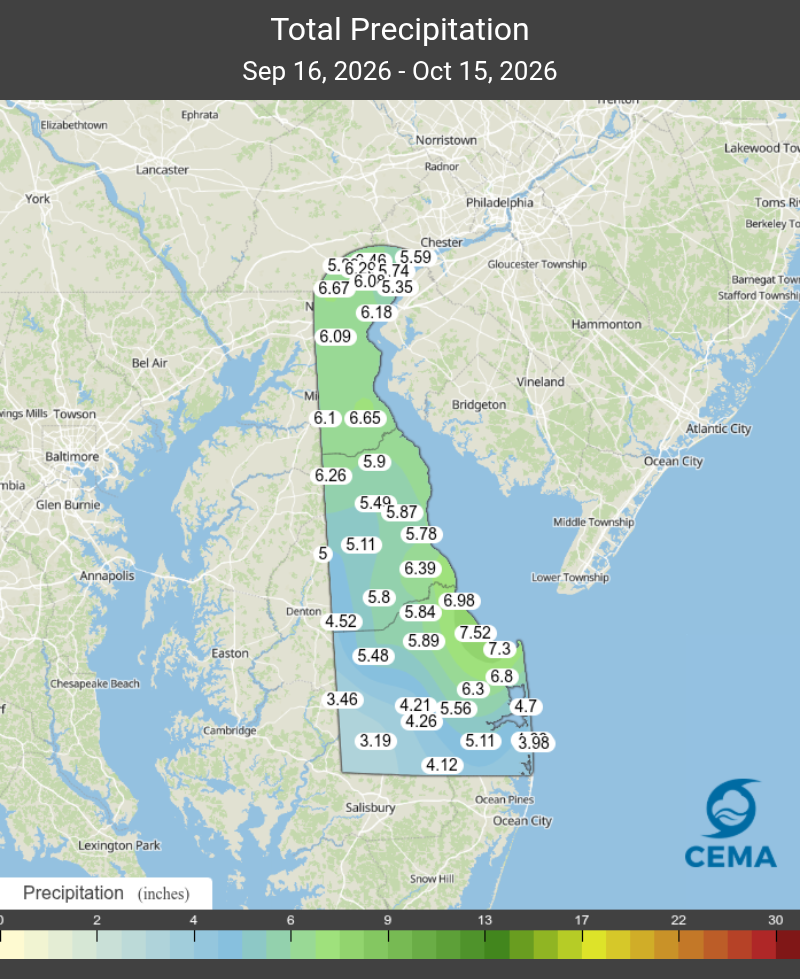
October precipitation has started on a good note as well. For the first two weeks of the month, the state has averaged 2.28”, according to data from the DEOS Network (Figure 1).
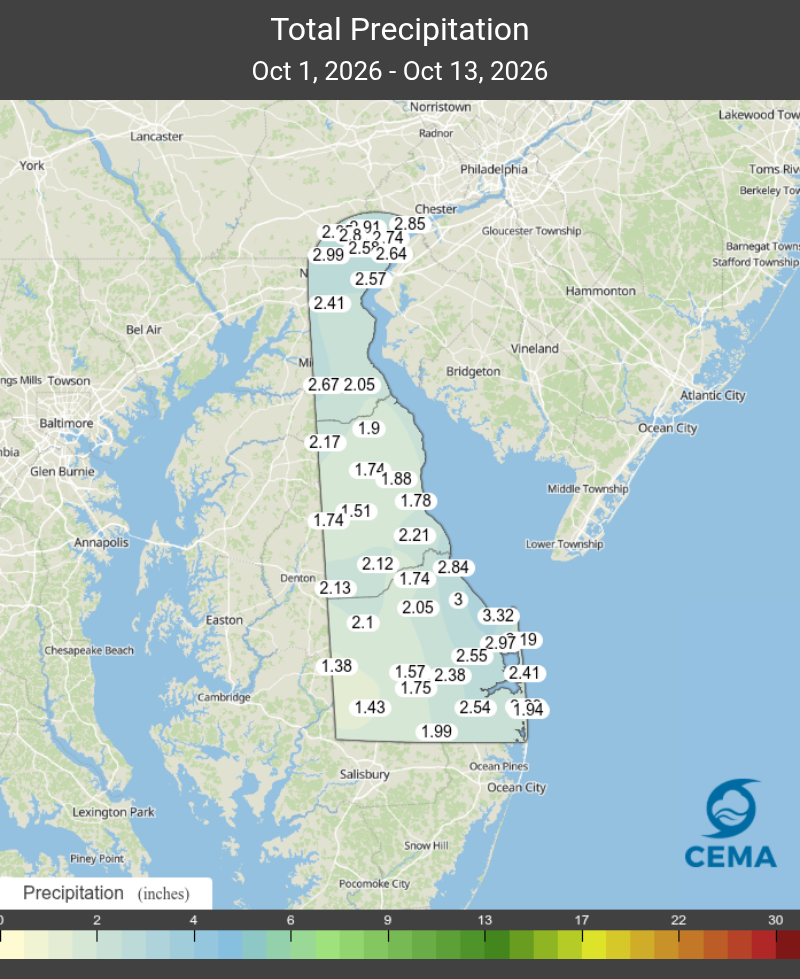
Over 3 inches of rain has fallen already in the Lewes-Prime Hook area. The northern part of New Castle County (north of Route 40) has seen 2.5 to 3.0 inches as well. This is sufficient to keep October tracking near normal for the month, as long as we continue to see one or two decent rain events each week.
Temperature/Evapotranspiration
As the growing season winds down, statewide reference evapotranspiration rates have been generally in the normal range (i.e., in the 25th to 75th percentile from 2010 to present) over the last 30 days (Figure 2).
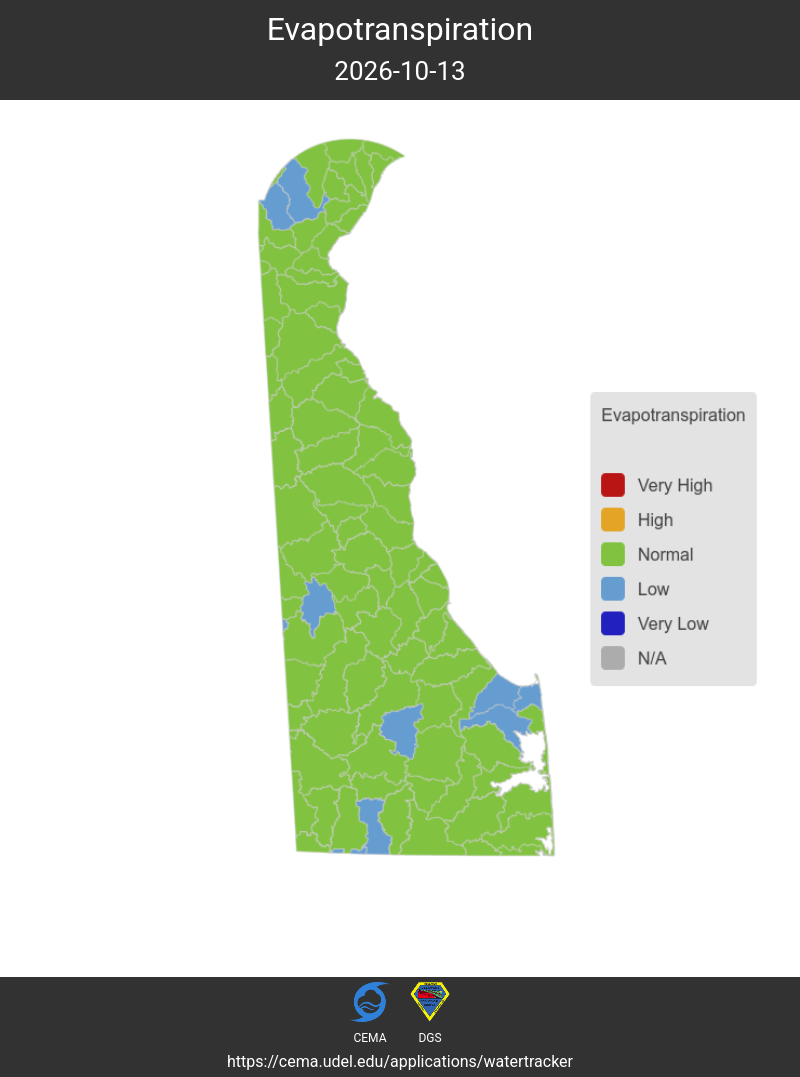
This is helpful for drought purposes, as it limits the “loss” of water from the environment to the atmosphere. While we tend to run a small surplus in the water balance in September, the month of October is the first month after the summer when we climatologically see precipitation exceed evapotranspiration by a significant margin. On average, monthly evapotranspiration for Delaware in October is 2 to 2.5 inches. With precipitation totals through the first two weeks of this month already at or above that level, any additional rain we receive the rest of the month will only help to improve the long-term dryness we’ve been experiencing.
Soil Moisture
Based on the satellite-model blended data from NASA in Figure 3, there is no location in Delaware with below normal soil moisture for this time of year.
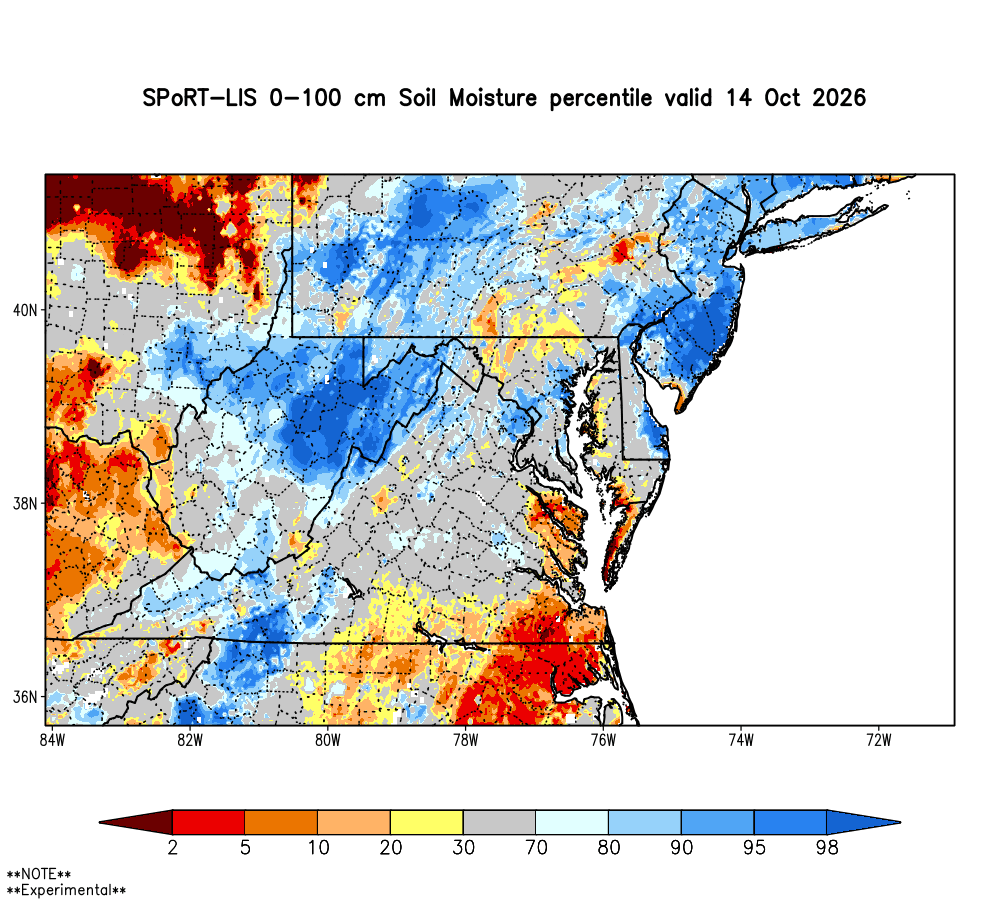
In fact, the recent rainfall from the Nor’easter earlier this month, pushes two parts of our state (northern New Castle County and eastern Sussex County) quite a bit above normal for this time of year.
Streamflow
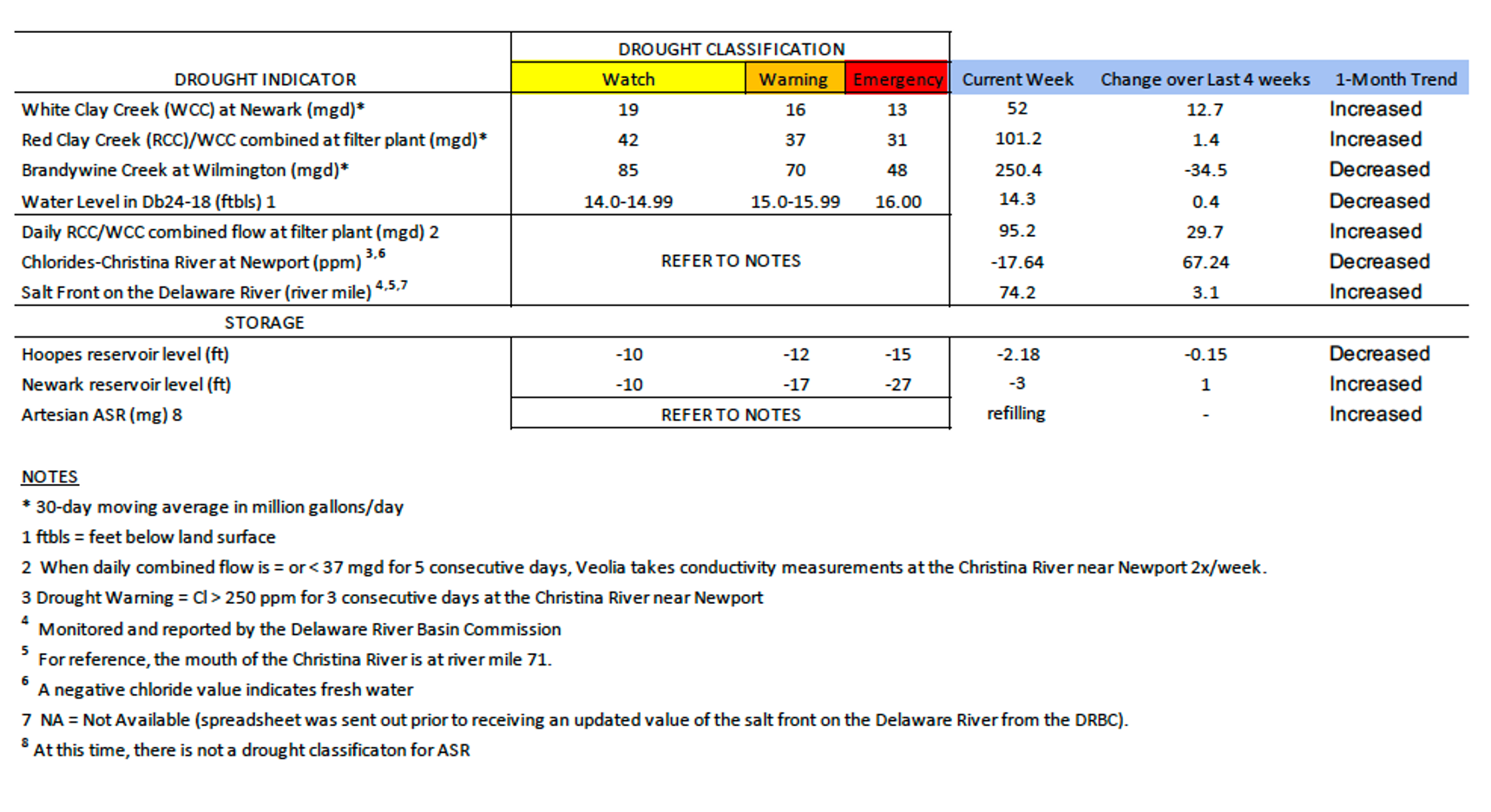
Driven by heavy autumn rainfall and sustained precipitation gains following an extended dry spell, Delaware’s streamflows have made a dramatic recovery across the state (Table 1). Real-time monitoring across 15 USGS streamgauges in Delaware shows statewide discharge surging to roughly 1,400% of normal daily historical averages in mid-October 2026.
Key rivers and streams throughout northern New Castle County have experienced significant flow rebounds, highlighted by the Brandywine Creek at Wilmington reaching peak flows of approximately 3,500 cubic feet per second (approximately 2,200 million gallons per day). This major surge in stream and river discharge has effectively wiped out acute surface water deficits built up over the previous year, elevating surface flows well into above-normal territory statewide and revitalizing local aquatic systems.
In Kent County, the St. Jones River at Dover has maintained flow comfortably in the normal range since June with one excursion into the extremely below-normal range, which occurred at the beginning of July. Please note, however, that the flows on the St. Jones River at Dover are highly affected by tidal inflow and as such may be artificially inflated. Since early July, flows on the Nanticoke River at Bridgeville have been above normal to normal, and after trending toward below normal, recent rains have bumped the flows back into the low end of normal.
Chlorides
One of the most definitive indicators of a regional drought is the behavior of the Delaware River salt front—the interface where salty ocean water meets fresh river water. Specific conductance (a proxy for chloride) readings at the Christina River at Newport have been relatively low since the first week of July. Freshwater inflow to the Christina from scattered summer storms along with freshwater flows coming down from the headwaters of the Delaware River will tend to impede the advancement of chlorides up the Christina River.
Groundwater
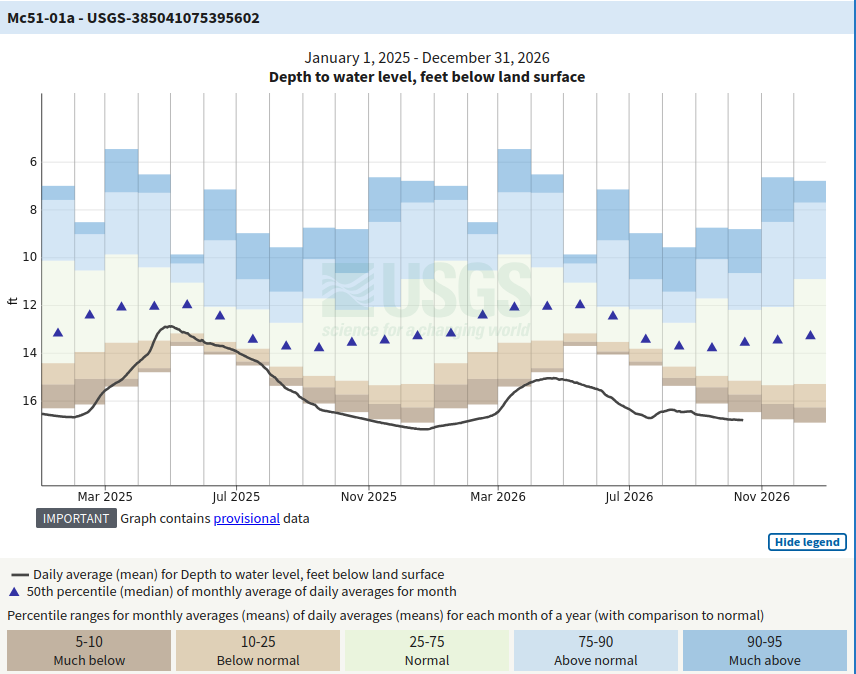
Groundwater recovery continues to lag behind surface water and soil moisture, as more than nine months of precipitation deficits and slow subsurface infiltration delay deep aquifer recharge. Consequently, groundwater conditions across Delaware remain highly variable depending on localized rainfall totals. Near Newark, monitoring well Db24-18 previously dropped beyond 14.9 feet below land surface (fbls), but three consecutive months of above-normal precipitation have finally initiated recharge. Although starting to recharge a bit, conditions in southwestern Kent County remain severely depressed: well Mc51-01a sits at 16.8 fbls—nearing historical record lows since mid-2025 and well below its typical October average of 12.5 to 14.6 fbls (Figure 4). Meanwhile, localized recovery is evident south of Georgetown, where well Pf24-02 has rebounded closer to the surface and returned to an average depth for this time of year (Figure 5).
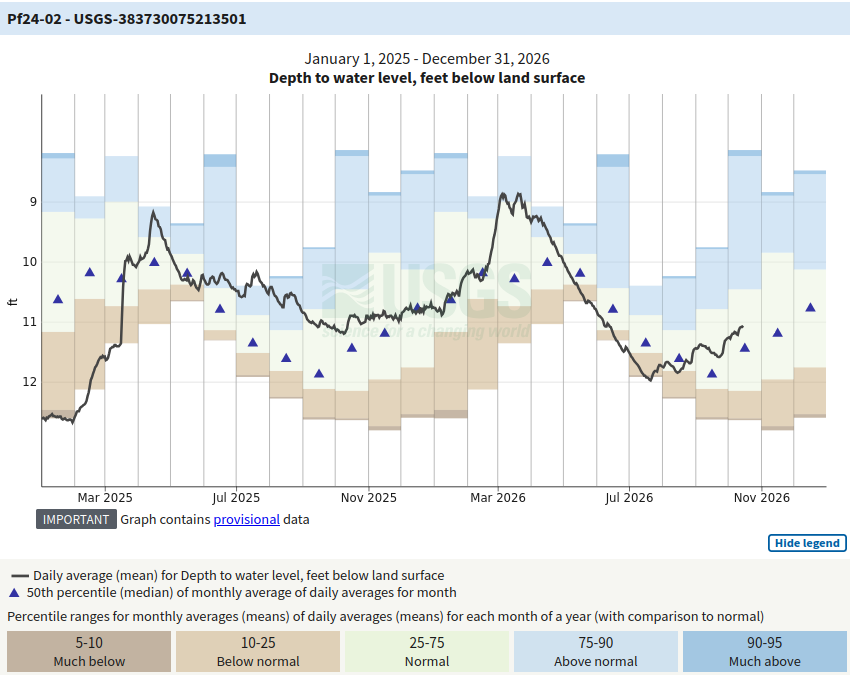
After remaining in the normal range, monitoring well Pf24-02 (located south of Georgetown) dropped into the below normal range in late June. Currently, it has decreased in depth to water (meaning the water level in the well is getting closer to the surface) and is currently in the normal range. This slight improvement in the water level reflects the geographic variability in groundwater response to precipitation across Delaware.
Delaware’s groundwater system responds slowly to changes in precipitation compared with surface water (like streams and rivers). As a result, patterns of dry weather tend to show up first in streamflow and soil moisture, and then, if dry conditions persist, in groundwater levels and aquifer conditions.
Groundwater is a major source of drinking water and irrigation supply in much of Delaware, especially south of the Chesapeake and Delaware Canal. Extended periods of low levels can reduce well yields and may require deeper pumping or alternative supply strategies in some communities. Persistently low groundwater levels increase the risk of saltwater intrusion in coastal and near-estuarine aquifers, complicating long-term freshwater sustainment.
Weather and Climate Outlook
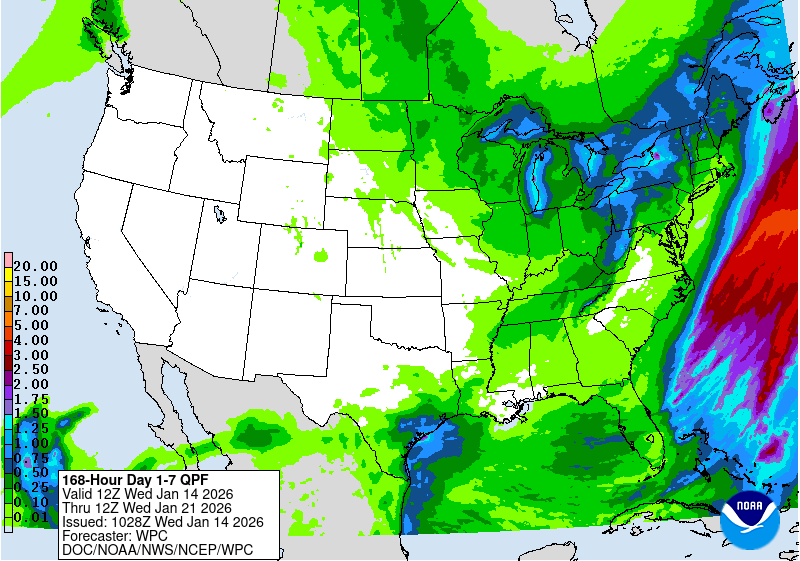
The strong El Nino that has formed this year should continue to strengthen for the next month or two, likely peaking in November or December. As a result, the climate outlook issued by NOAA’s Climate Prediction Center (CPC) for November shows much wetter conditions across the southern tier of the United States and generally warmer conditions across the northern tier of the United States (Figures 6 and 7).
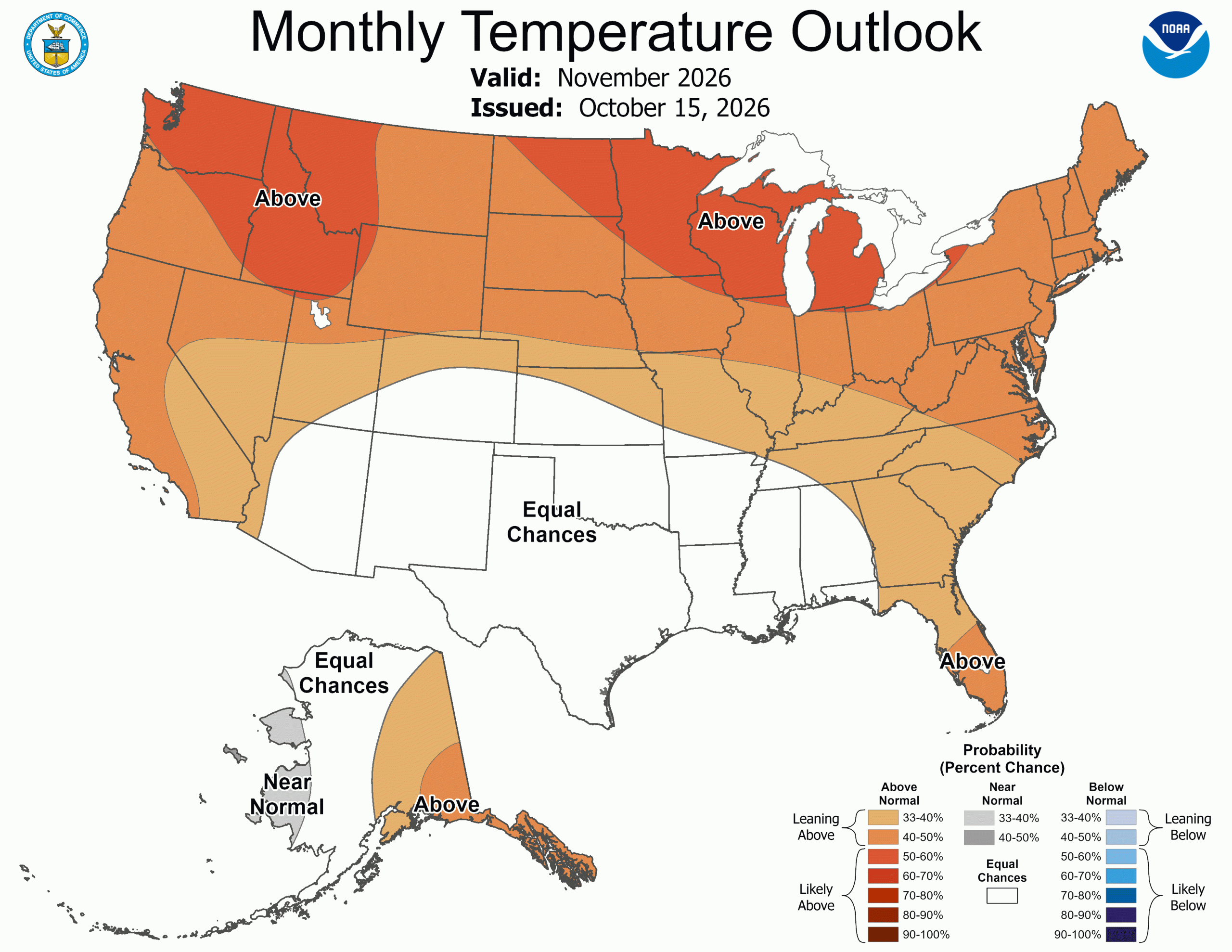
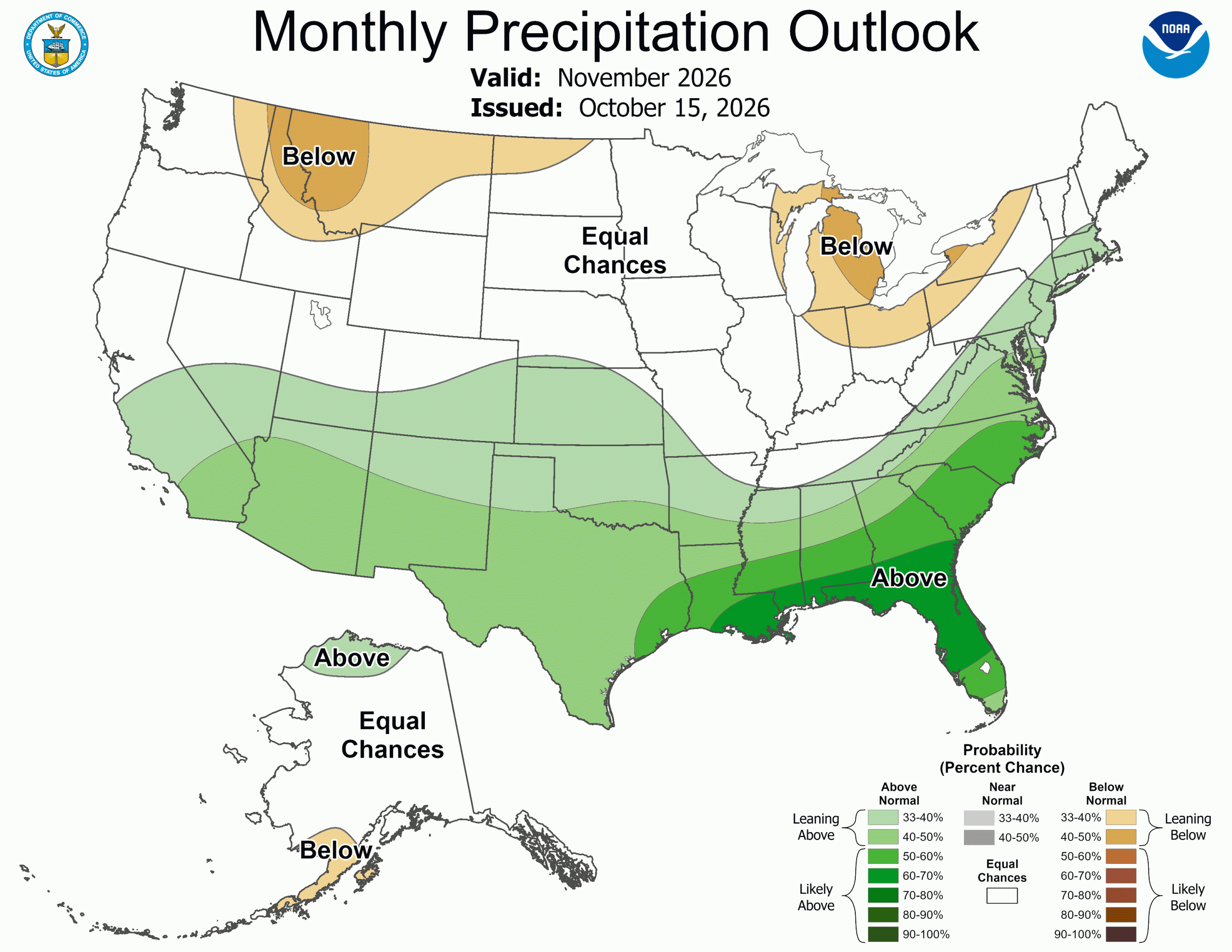
For Delaware, the CPC Outlook shows above normal temperature and precipitation, which should continue to help with our drought recovery.
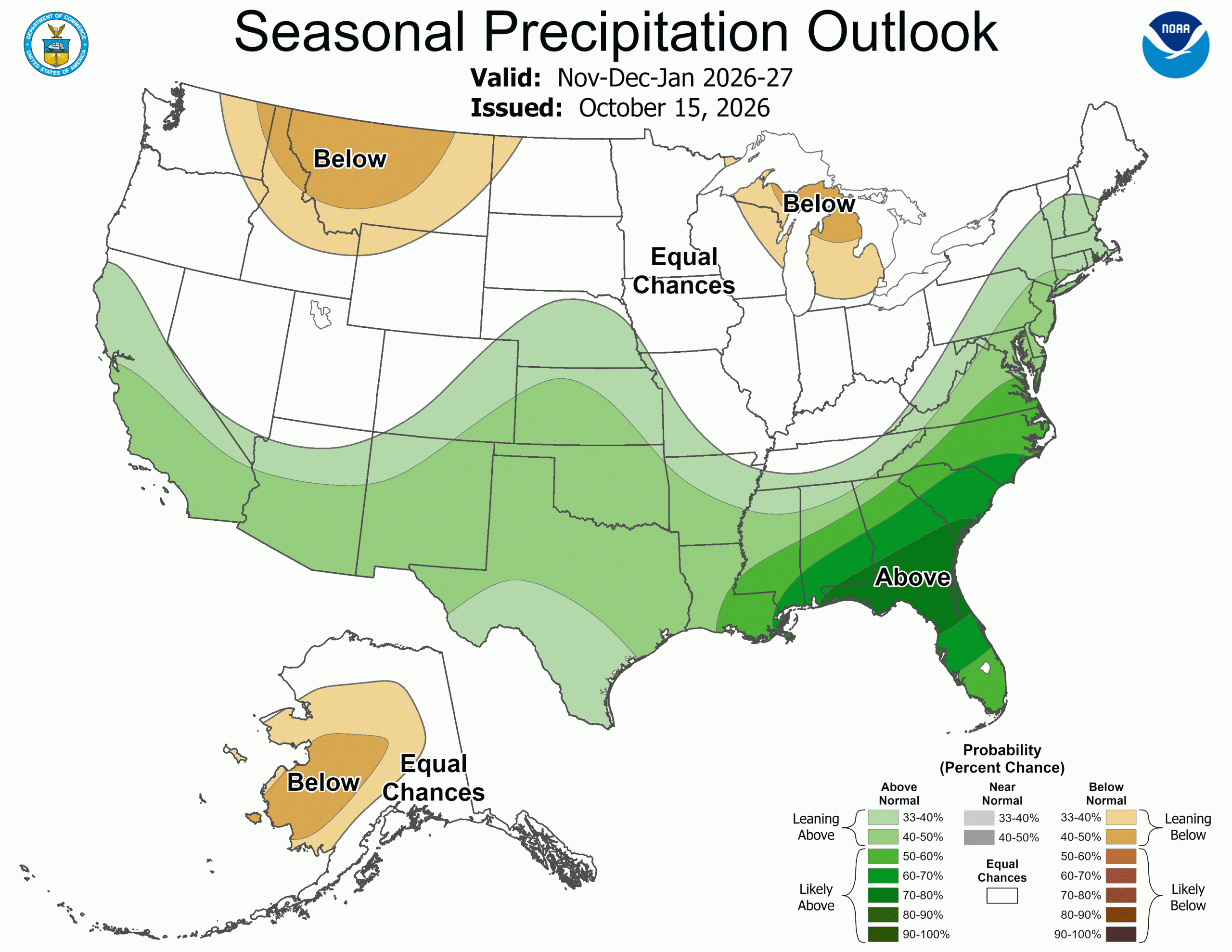
Winter is the season where ENSO, or the El Nino-Southern Oscillation, climate pattern correlates most strongly with our weather conditions in Delaware. This is mainly because this is when El Nino’s influence on atmospheric patterns, such as the Pacific (subtropical) jet stream, are most pronounced. The strengthening of the Pacific jet stream, which is usually located across the Gulf Coast states, northern Mexico, and southern California, plays a major part in the amount of moisture and energy that’s carried into our region during the winter. A stronger Pacific jet (as a result of this El Nino) will likely mean more moisture is available when storm systems come through our region. It also means we’re likely to see more coastal storms during the winter, which can certainly influence our precipitation. The CPC seasonal precipitation outlook for November through January (Figure 8) shows this pattern is locked in throughout most of the winter, so Delaware is likely to see above normal precipitation this winter as well.
Delaware Drought Status
Watch
Resources
- Delaware Water Tracker
- DGS Water Conditions Report
- US Drought Monitor
- NOAA Climate at a Glance
- Drought.gov DE site
- DE Water Supply Coordinating Council
- DRBC Drought Dashboard
- Surrounding State Pages:


Climate Office Partners